
Male Fertility Supplements: What Works and What Doesn't
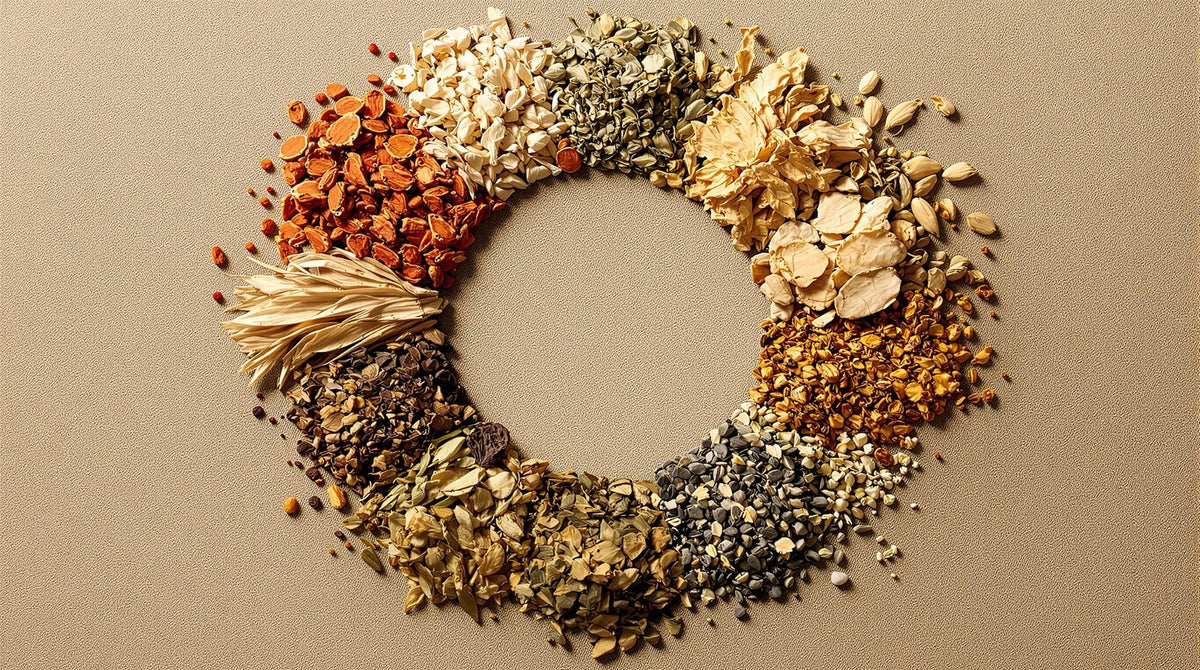
Some male fertility supplements are supported by clinical research and many are not. Randomized trials show that antioxidants such as coenzyme Q10, L carnitine, zinc, selenium, and folate can improve sperm count, motility, and shape in men with suboptimal parameters, though the effect on actual pregnancy rates stays modest. Testosterone boosters and unproven proprietary blends show little benefit and can even suppress sperm production. Traditional Chinese herbal formulations take a different route, supporting the whole reproductive picture rather than dosing one nutrient in isolation. The strongest results come from consistent use across a full cycle of sperm production, roughly three months.
Do male fertility supplements actually work?
Some do, selectively. Well studied antioxidants can measurably improve sperm quality in subfertile men, while many marketed pills offer no proven benefit at all. The difference comes down to the specific ingredient, the dose, and whether a real clinical trial ever tested it. Consistency over three months matters more than any single capsule.
Male factor issues contribute to roughly half of all cases where a couple struggles to conceive, yet men are often handed a bottle off a shelf with no idea whether it does anything. The supplement aisle is crowded with products that promise more energy, higher counts, and stronger swimmers. A handful of those ingredients have genuine evidence behind them. Most do not.
The honest picture is more encouraging than the marketing and more disciplined than the hype. Sperm is highly vulnerable to oxidative stress, the cellular damage caused by unstable molecules called free radicals. Antioxidants can blunt that damage, and that is where the real research clusters. When you strip away the noise, a short list of nutrients keeps showing up in the trials that matter.
What the research supports
Antioxidant nutrients have the strongest evidence for male fertility. Coenzyme Q10 and L carnitine improve sperm concentration and motility in randomized trials. Zinc, selenium, folate, and vitamin D each play a supporting role. The gains are real for sperm parameters, though the leap to higher live birth rates is still being studied.
A pooled analysis of randomized controlled trials looked at eight antioxidants together and ranked them by effect. Coenzyme Q10 came out ahead for sperm concentration, while carnitine ranked first for motility and shape. A separate pooled analysis of eight CoQ10 trials covering 877 men found significantly higher total sperm counts, better progressive motility, and more normally formed sperm in the treated groups compared with placebo.
| Ingredient | Evidence level | What it supports |
|---|---|---|
| Coenzyme Q10 | Strong (multiple RCTs) | Sperm count, motility, reduced oxidative damage |
| L carnitine | Strong (multiple RCTs) | Motility and normal sperm shape |
| Zinc | Moderate | Testosterone support and sperm volume |
| Selenium + vitamin E | Moderate | Motility, vitality, normal morphology |
| Folate | Moderate | Sperm DNA integrity, often paired with zinc |
| Vitamin D3 | Emerging | Hormonal balance and sperm motility |
The catch is important. Improving a lab number is not the same as bringing home a baby. Reviewers consistently note that while sperm parameters improve, the data on pregnancy and live birth rates stay limited and mixed. That does not make these nutrients useless. It means they are one input into a larger picture, not a guarantee on their own.
Dose and duration also decide the outcome. Sperm cells take about 74 days to develop from start to finish, so a two week trial of anything tells you almost nothing. The trials that show benefit run for three months or longer. If a man takes a supplement for a few weeks and sees no change, that is expected, not a failure of the ingredient.
Improving a lab number is not the same as bringing home a baby. The best evidence supports sperm quality, and that is one input into a larger picture.

What doesn't work (and what to skip)
Testosterone boosters are the clearest thing to avoid, because supplemental testosterone actually signals the body to shut down sperm production. Proprietary blends with undisclosed doses, mega dosing of single vitamins, and trendy botanicals with no fertility trials behind them round out the list of things that waste money and time.
The single biggest trap is the testosterone booster. It sounds logical that more testosterone would mean more fertility, but the opposite is true. When testosterone is taken from outside the body, the brain reads the levels as high enough and stops sending the signals that drive sperm production in the testes. Men trying to conceive should be especially careful here, because the effect can suppress counts sharply.
The patterns that signal a weak product
A few red flags separate a serious formulation from a shelf filler. Proprietary blends that hide the actual amount of each ingredient make it impossible to know whether you are getting a studied dose or a sprinkle. Mega dosing a single vitamin rarely helps and can backfire, since more is not better once a deficiency is corrected. And plenty of popular botanicals are marketed for virility with no real trials in men trying to conceive.
None of this means the answer is to do nothing. It means the standard should be higher. The right question is not whether a product sounds powerful, but whether the ingredients have been tested, whether the doses are disclosed, and whether the formulation was assembled by someone who understands how the parts work together instead of competing.
Where traditional Chinese herbs fit
Traditional Chinese herbal formulations treat male fertility as a whole terrain rather than a single number. Instead of one isolated nutrient, a balanced formulation combines herbs that tonify reproductive reserves, cool inflammation, and protect sperm from oxidative damage. Pooled analyses of TCM formulations report improvements in sperm concentration, motility, and DNA integrity.
Western supplements usually isolate one molecule and test it alone. Traditional Chinese medicine works from the opposite instinct. It reads sperm production as an expression of the whole body, especially what TCM calls kidney essence, the deep reproductive reserve. A formulation is built to support that reserve while also clearing the patterns, described as damp heat, that show up in Western terms as inflammation in the reproductive tract.
The evidence base here is real and growing. A pooled analysis of randomized controlled trials on the classical Wu Zi Yan Zong formulation found improvements in sperm parameters when used as an adjuvant treatment for men with abnormal semen analysis. A separate double blind, placebo controlled trial of the same family of herbs reported better semen quality in men with suboptimal parameters. Researchers point to several mechanisms at once, including regulation of the hormonal axis, reduced oxidative stress, and a lower sperm DNA fragmentation index.
Sperm is built from the whole body. A formulation that supports the entire terrain will usually do more than a single bottle working alone.
This is the logic behind the Project: Life male formulation. Rather than handing a man five separate bottles that never coordinate, Dr. Ye combines a small set of herbs chosen to work as a unit, some tonifying reproductive reserves, others cooling inflammation, others protecting sperm from oxidative damage. The goal is balance across the whole system rather than a spike in any single measure.

The herbs in the Project: Life male formulation
The Project: Life male formulation contains eight clinic grade TCM herbs chosen for sperm health. They combine kidney tonics that support production, herbs that reduce inflammation in the reproductive tract, and antioxidant herbs that protect sperm DNA. Vitamin D3 is the one non herbal addition recommended alongside.
Each herb is selected for a specific role, and the balance between warming and cooling herbs is deliberate. Below is what sits in the formulation and why.
Tonifies kidney essence, the TCM foundation of sperm production. Antioxidant action helps protect sperm from oxidative DNA damage and supports the male hormonal axis.
Dodder seed supports sperm production, motility, and shape through kidney tonification, while helping shield testicular tissue from oxidative damage.
A yin tonic that balances the warming herbs. Studied for antioxidant effects on testicular tissue and for supporting sperm DNA integrity.
Clears damp heat, the TCM pattern that maps to inflammation in the reproductive tract. Keeps the formulation from over warming.
Himalayan teasel root supports kidney essence and reproductive vitality, with effects that calm inflammation in reproductive tissue.
A Qi tonic that supports sperm motility through better cellular energy, and modulates the immune response linked to antisperm antibodies.
Plantain seed clears dampness and heat from the lower reproductive tract. Used in TCM to improve sperm quality where inflammation is a factor.
Raw Rehmannia cools and nourishes yin, protecting testicular tissue from heat, which in Western terms tracks with oxidative stress.
The one addition outside the herbs is Vitamin D3, which Dr. Ye recommends alongside the formulation rather than inside it. Low vitamin D is common and is associated with poorer sperm motility, so correcting it is a simple, well supported step to pair with the herbal formulation.
How long it takes to see change
Give any male fertility approach at least three months. Sperm takes about 74 days to develop from an early cell to a mature one, so today's semen analysis reflects choices made months ago. Real change in a follow up test needs a full production cycle, which is why short trials of anything look disappointing.
This single fact reframes almost every frustration men have with fertility supplements. A semen analysis is a snapshot of a batch of sperm that began forming months before the test. Whatever you start today, herbs or antioxidants or lifestyle changes, will not show up in the numbers for roughly three months. That is not a marketing excuse, it is simply how spermatogenesis works.
The practical takeaway is patience paired with consistency. Choose an approach with real evidence, take it daily, hold the other basics steady, then retest after three months. That rhythm gives the body the time it actually needs, and it protects you from switching products every few weeks chasing a change that was never going to appear that fast.
Frequently Asked Questions
Do male fertility supplements actually improve the chance of conceiving?
They can improve sperm quality measures such as count, motility, and shape, which is well documented in randomized trials of antioxidants like coenzyme Q10 and L carnitine. The evidence that they raise live birth rates is weaker and still being studied, so treat them as one supportive input rather than a guarantee.
Should men take a testosterone booster to help fertility?
No. Supplemental testosterone signals the brain that levels are high enough, which shuts down the body's own sperm production. Men trying to conceive should avoid testosterone boosters, because they can lower counts rather than raise them.
How long before a supplement changes a semen analysis?
Plan on at least three months. Sperm takes about 74 days to develop, so any test today reflects a batch that started forming months ago. A meaningful change needs a full production cycle of consistent daily use before a retest.
How do TCM herbs differ from a standard fertility supplement?
A standard supplement usually isolates one nutrient. A traditional Chinese herbal formulation combines several herbs chosen to work as a unit, some building reproductive reserves, others reducing inflammation, others protecting sperm from oxidative damage. Pooled analyses of these formulations report improvements in sperm parameters and DNA integrity.
What is in the Project: Life male formulation?
It contains eight clinic grade TCM herbs selected for sperm health, including Sha Yuan Zi, Tu Si Zi, Nu Zhen Zi, and Huang Qi, balanced between warming tonics and cooling herbs. Dr. Ye recommends Vitamin D3 alongside it as the one non herbal addition.
Key Takeaways
- Antioxidants such as coenzyme Q10, L carnitine, zinc, selenium, and folate have the strongest evidence for improving sperm quality in subfertile men.
- Testosterone boosters are the clearest thing to avoid, because supplemental testosterone can suppress the body's own sperm production.
- Skip proprietary blends with hidden doses and trendy botanicals that have no fertility trials behind them.
- Traditional Chinese herbal formulations support the whole reproductive terrain and show benefit in pooled analyses of sperm parameters.
- Give any approach at least three months, because a full cycle of sperm production takes about 74 days.
Medical Disclaimer: This content is for informational purposes only and does not constitute medical advice. Consult your healthcare provider before starting any supplement regimen, including TCM herbs. Individual results vary.
DSHEA Notice: These statements have not been evaluated by the Food and Drug Administration. This product is not intended to diagnose, treat, cure, or prevent any disease.
Sources
- Zhao Y, et al. The Effect of Antioxidants on Sperm Quality Parameters and Pregnancy Rates for Idiopathic Male Infertility: A Network Meta-Analysis of Randomized Controlled Trials. Advances in Nutrition. 2022. PMC8898892
- Salvio G, et al. Does coenzyme Q10 improve semen quality and circulating testosterone level? A systematic review and meta-analysis of randomized controlled trials. 2024. PMC11739123
- Adjuvant treatment with the Wu Zi Yan Zong formulation for abnormal sperm parameters associated with male infertility: a meta-analysis of randomized controlled trials. Frontiers in Pharmacology. 2025. PMC12089090
- Zhang H, et al. A double blinded, randomized placebo controlled trial on the effect of the traditional Chinese herbal Wuzi Yanzong pill on improving semen qualities in men with suboptimal parameters. 2019. PMC6716803
- Antioxidant Supplementation on Sperm DNA Fragmentation and Sperm Parameters: A Systematic Review and Meta-Analysis. 2022. PMC9623341
- Ried K, Stuart K. Efficacy of Traditional Chinese Herbal Medicine in the management of female infertility: a systematic review. Complementary Therapies in Medicine. 2011. PubMed 21742283
Related reading: The Truth About Male Fertility · The Egg Quality Guide · Find My Formulation