
The TCM Fertility Diet: Eating for Each Phase of Your Cycle
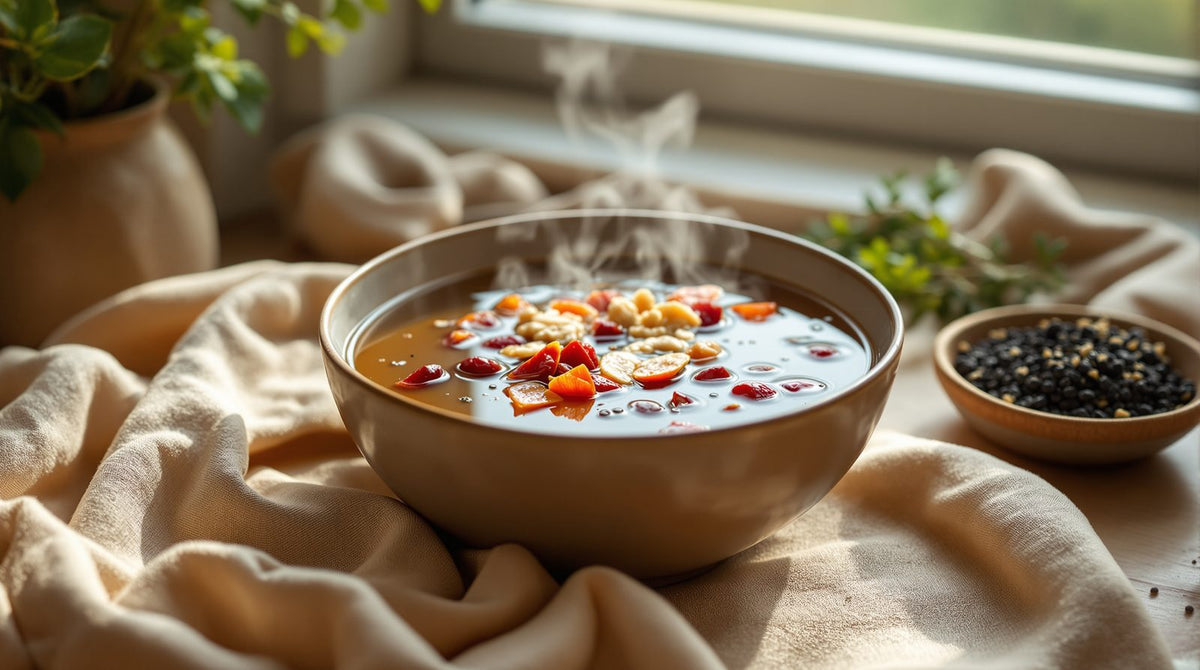
In Traditional Chinese Medicine, the four phases of your cycle each ask for different nourishment. The follicular phase favors foods that build Blood and Yin, such as leafy greens, beets, and berries. Ovulation calls for foods that move Qi and Blood, like ginger, citrus, and colorful vegetables. The luteal phase benefits from warming, Yang supporting foods such as cooked root vegetables and bone broth. Menstruation is a time to rest and replenish with warm, iron rich meals. Eating with your cycle supports the same patterns Dr. Ye works with through clinic grade TCM herbs.
How TCM connects food to your cycle
Traditional Chinese Medicine reads the menstrual cycle as a rhythm of Blood and Qi moving through four distinct phases. Food is the raw material your body draws on to build Blood, nourish Yin, and warm Yang. Matching what you eat to each phase gives your reproductive system the specific support it needs at the right moment.
The lining clears and the cycle resets. TCM focus: moving Blood smoothly.
Follicles grow and the lining rebuilds. TCM focus: building Yin and Blood.
The egg releases and energy shifts. TCM focus: smooth Qi movement.
The lining holds and warmth sustains. TCM focus: steady Yang support.
In TCM, fertility rests on three foundations: Kidney Jing (the deep constitutional reserve you inherit and slowly spend), Blood (which fills and thickens the uterine lining), and Qi (the moving energy that circulates everything to where it needs to go). A cycle that runs smoothly depends on all three staying full and flowing. When any one of them runs low, the signs show up as irregular timing, thin lining, painful periods, or scanty flow.
Western nutrition science arrives at a similar place from a different direction. Different points in the cycle place different demands on the body: iron drops after bleeding, estrogen climbs as a follicle matures, progesterone rises after ovulation, and metabolic rate shifts in the second half. Eating in a way that meets those shifting demands is what practitioners mean by eating with your cycle.
The overview below maps the four phases to their TCM focus and the foods that support each one. The sections that follow go deeper into the reasoning and the specific meals.
| Phase | Cycle days | TCM focus | Foods to favor |
|---|---|---|---|
| Menstrual | Days 1 to 5 | Move and release Blood, then begin to replenish | Warm iron rich meals, cooked greens, beets, dates, bone broth |
| Follicular | Days 6 to 13 | Build Blood and nourish Yin | Leafy greens, berries, eggs, sprouted grains, seeds |
| Ovulation | Days 14 to 16 | Move Qi and Blood | Ginger, citrus, light proteins, colorful vegetables |
| Luteal | Days 17 to 28 | Warm and nourish Yang | Root vegetables, bone broth, warming spices, whole grains |
A note before the specifics: TCM strongly favors warm, cooked food over raw and cold, especially for anyone with signs of Blood or Yang deficiency. The reasoning is that the body spends energy warming and breaking down cold food, energy TCM would rather see directed toward the reproductive organs. This is why so much of the guidance below leans toward soups, stews, and gently cooked vegetables rather than iced smoothies and large raw salads.

The follicular phase: build Blood and Yin
The follicular phase runs from the end of your period to ovulation, roughly days 6 to 13. In TCM this is the Yin and Blood building window: your body is thickening the uterine lining and maturing a follicle. Favor foods that nourish Blood and Yin, such as dark leafy greens, beets, berries, eggs, and seeds.
As estrogen rises through the follicular phase, the uterine lining rebuilds and a dominant follicle matures. TCM frames this as the growth of Yin and Blood, the cool, substantial, nourishing foundation that a healthy lining and a healthy egg are built from. The kitchen goal is simple: give the body abundant raw material.
Blood building foods sit at the center of this phase. Dark leafy greens such as spinach, kale, and Swiss chard supply iron and folate. Beets, a classic Blood tonic in both traditions, support circulation and liver function. Berries and other deeply colored fruits deliver the antioxidants that protect developing eggs from oxidative stress. Eggs, a small amount of quality red meat, and legumes round out the protein and iron your body needs to rebuild after bleeding.
What to put on your plate
Think warm breakfasts of oats with stewed berries and a spoon of tahini, lunches built around cooked greens and lentils, and dinners that pair a modest portion of protein with a rainbow of gently roasted vegetables. Sprouted grains and pumpkin or sunflower seeds are traditional additions during the first half of the cycle.
Iron matters most in the days right after your period, when stores are lowest. Pairing iron rich plants with a source of vitamin C, such as citrus or bell peppers, meaningfully increases how much iron your body absorbs, which supports the Blood building work of the follicular phase.
A large scoping review of preconception nutrition in Human Reproduction Update found that women who ate more vegetables, fruit, whole grains, and seafood, and fewer processed foods, tended to have better fertility outcomes. That pattern lines up closely with the Blood and Yin nourishing plate TCM recommends in the follicular phase.
The follicular phase is when you hand the body the raw material for a healthy lining and a healthy egg. Feed it well and you shape everything that follows.
Ovulation: move Qi and Blood
Ovulation happens around the midpoint of your cycle, roughly days 14 to 16. In TCM this is the moment Blood and Qi must move so the egg can release and travel. Favor foods that gently invigorate circulation, such as ginger, citrus, beets, and fresh colorful vegetables, alongside enough quality fat and protein.
Ovulation is a burst of movement. The follicle ruptures, the egg releases, and cervical fluid shifts to support conception. TCM sees this as the transition from the Yin building first half to the Yang warming second half, and it depends on Qi and Blood flowing freely rather than stagnating. Foods that support smooth circulation take priority here.
Qi and Blood movers include ginger, which warms and invigorates, and a wide range of brightly colored vegetables that supply the antioxidants eggs rely on at the moment of release. This is a good phase for lighter cooking methods, a little more raw produce if you tolerate it well, and generous hydration. Quality fats from olive oil, avocado, and oily fish supply the building blocks of the hormones peaking at this point.
Omega 3 fats are the most abundant of their kind in follicular fluid and support the membrane quality of the maturing egg. In one controlled study, one month of omega 3 supplementation significantly lowered FSH, a marker linked to ovarian reserve, in normal weight women.
Practically, an ovulation phase day might look like a salmon and avocado bowl brightened with lemon and fresh herbs, a ginger and vegetable stir fry, or a broth based soup with plenty of color. The aim is vitality and movement rather than heaviness, matching the energetic quality of the phase itself.

The luteal phase: warm and nourish Yang
The luteal phase spans ovulation to your next period, roughly days 17 to 28. In TCM it is governed by Yang, the warm, active energy that sustains the uterine lining and, if conception occurs, an early pregnancy. Favor warming, grounding foods such as cooked root vegetables, bone broth, whole grains, and warming spices.
After ovulation, progesterone rises and the body prepares to either support an implanting embryo or shed the lining and begin again. TCM calls the driving force here Kidney Yang: warmth, steadiness, and the capacity to hold and sustain. Metabolic rate also climbs slightly in the luteal phase, and many women notice a real increase in appetite. This is not a phase for restriction.
Warming, Yang supporting foods are the theme. Cooked root vegetables such as sweet potato, squash, carrots, and parsnip provide grounding complex carbohydrates. Bone broth, stews, and slow cooked dishes deliver warmth and minerals. Warming spices, including cinnamon, ginger, and a little clove, gently support circulation and digestion. Whole grains and legumes stabilize blood sugar and steady the mood shifts that can accompany the second half of the cycle.
Easing premenstrual symptoms
Magnesium rich foods such as dark leafy greens, pumpkin seeds, and a small amount of dark chocolate can ease the cramping and tension many women feel late in the luteal phase. Keeping blood sugar steady with regular, warm, protein anchored meals tends to smooth out irritability and cravings far better than reaching for cold or sugary quick fixes.
A meta analysis of cohort studies found that closer adherence to a Mediterranean style pattern, rich in vegetables, whole grains, legumes, and healthy fats, was associated with better fertility outcomes. Much of the warm, grounding luteal plate maps directly onto that same pattern.
A luteal phase dinner might be a lamb and root vegetable stew, a lentil and squash curry warmed with ginger and cinnamon, or roasted sweet potato with greens and a soft boiled egg. Warmth, weight, and nourishment are the qualities to aim for.

Menstruation: rest and replenish
Menstruation, roughly days 1 to 5, is when the lining sheds and Blood is released. In TCM the priority is to let the Blood move out cleanly, then begin to replenish what was lost. Favor warm, easily digested, iron rich meals and reduce cold and raw foods, which TCM sees as slowing the flow.
The bleeding phase is a release. TCM wants Blood to move out smoothly and completely, because Blood that stagnates is associated with clots, cramping, and pain. Warmth is the central principle: warm food, warm drinks, and a warm belly all support a clean, comfortable flow. Cold and raw foods, iced drinks, and heavy salads are traditionally reduced during these days.
Because you are actively losing Blood and iron, replenishment begins now. Iron rich, warming foods lead the way: cooked leafy greens, beets, a little quality red meat if you eat it, lentils, and Blood nourishing additions such as dates and goji berries in a warm porridge or broth. Ginger and cinnamon tea can ease cramping and keep the lower abdomen warm.
Eating iron rich foods across menstruation and the early follicular phase helps replace what bleeding depletes and prepares the body for the Blood building work ahead. Warm preparation, from soups to stews to porridge, is easier to digest at a time when TCM sees energy as best conserved.
This is also the phase to honor rest. Gentle movement, earlier nights, and simple warm meals reflect the quieter, inward quality TCM associates with the bleeding days. The nourishment you take in now sets the tone for the entire cycle that follows.
Where clinic grade herbs fit alongside food
Food supplies the raw material, but many women need more targeted support for specific patterns such as thin lining, low reserve, or irregular timing. This is where clinic grade TCM herbs come in. Dr. Ye's formulations concentrate herbs that build Blood, nourish Yin and Jing, and warm Yang, matched to your profile.
A phase aware diet is foundational, and for many women it is not the whole picture. Diet works slowly and broadly. Herbs work more specifically. The same TCM logic that shapes the plate, building Blood, nourishing Yin and Jing, moving Qi, and warming Yang, is what guides a formulation, only concentrated and matched to the pattern a given woman actually shows.
Project: Life's female formulation draws on 12 clinic grade TCM herbs. A handful of them map directly onto the phase goals described above.
The classic Blood builder and cycle regulator, revered in TCM for over 2,000 years for women's reproductive health. Supports circulation to the uterus and the lining building work of the follicular phase.
The premier herb for nourishing Kidney Yin and Jing, the deep reserve that sustains egg quality. A foundational herb for women over 35 whose reserves need deeper support.
One of the most antioxidant dense herbs in TCM. Studied for its protective effect on egg quality and its role in nourishing Liver Blood and Kidney Yin.
A warming Kidney Yang tonic that supports the luteal phase, progesterone driven work of sustaining the lining, echoing the warm, grounding foods of the second half of the cycle.
The herbs are brewed and taken as a warm tea, which is itself in keeping with the TCM preference for warmth. Most women find the taste strong and earthy at first and settle into it within a week or two. A formulation is matched through a short intake that reads your cycle, symptoms, and history, so the herbs address your pattern rather than a generic one.
The evidence base for this approach is growing. A systematic review by Ried and Stuart pooled data from dozens of studies and reported that women using traditional Chinese herbs saw meaningfully higher pregnancy rates over a defined period compared with conventional drug treatment alone, though the authors called for more rigorous trials.
Frequently Asked Questions
Do I really need to eat differently in each phase of my cycle?
You do not need a rigid, separate menu for each phase. The larger goal is a warm, whole food pattern rich in Blood building and antioxidant dense foods across the whole month. Phase awareness is a way to fine tune: leaning into iron and Blood builders around your period and follicular phase, movement and quality fats around ovulation, and warming, grounding foods in the luteal phase. Even small shifts in that direction help.
Why does TCM discourage cold and raw foods?
TCM holds that the body spends energy warming and breaking down cold and raw food, energy it would rather direct toward the reproductive organs. Warm, cooked food is seen as easier to digest and more supportive of Blood and Yang, especially for women with signs of deficiency such as fatigue, cold hands and feet, or scanty flow. This is a preference, not an absolute rule, and you can adjust it to your own constitution.
Can diet alone improve my fertility?
A warm, nutrient rich, phase aware diet builds a strong foundation and is well supported by research on preconception nutrition. For some women it is enough. For others, specific patterns such as thin lining, low reserve, or irregular timing benefit from more targeted support, which is where clinic grade TCM herbs matched to your profile come in. Food and herbs work best together, not in place of each other.
What foods are most important if I only change one thing?
Prioritize warm, iron rich, Blood building foods: cooked leafy greens, beets, quality protein, and antioxidant rich colorful fruits and vegetables, while reducing processed and sugary foods. Pairing iron rich plants with a source of vitamin C improves absorption. This single shift supports the Blood foundation that every phase of the cycle depends on.
How do Project: Life herbs relate to a phase based diet?
They follow the same TCM logic, concentrated and matched to your pattern. The formulation draws on 12 clinic grade TCM herbs that build Blood, nourish Yin and Jing, and warm Yang, the same principles that guide the plate. It is brewed as a warm tea and matched to you through a short intake covering your cycle, symptoms, and history.
Key Takeaways
- TCM reads the cycle as four phases, each with its own nutritional focus: build Blood and Yin in the follicular phase, move Qi and Blood at ovulation, warm Yang in the luteal phase, and replenish during menstruation.
- Warm, cooked, iron rich, and antioxidant dense foods form the foundation across the whole month; TCM favors these over cold and raw options.
- Preconception nutrition research aligns closely with the TCM plate, linking vegetables, whole grains, quality fats, and omega 3s to better fertility outcomes.
- Food supplies raw material broadly; clinic grade TCM herbs give more targeted support for specific patterns such as thin lining or low reserve.
- Project: Life's 12 herb female formulation follows the same Blood building, Yin nourishing, Yang warming logic, matched to your profile and taken as a warm tea.
Medical Disclaimer: This content is for informational purposes only and does not constitute medical advice. Consult your healthcare provider before starting any supplement regimen, including TCM herbs. Individual results vary.
DSHEA Notice: These statements have not been evaluated by the Food and Drug Administration. This product is not intended to diagnose, treat, cure, or prevent any disease.
Sources
- Ried K, Stuart K. Efficacy of Traditional Chinese Herbal Medicine in the management of female infertility: a systematic review. Complementary Therapies in Medicine. 2011;19(6):319-331. https://pubmed.ncbi.nlm.nih.gov/22036524/
- Nadjarzadeh A, et al. Reduction in FSH throughout the menstrual cycle after omega-3 fatty acid supplementation in young normal weight but not obese women. PubMed. https://pubmed.ncbi.nlm.nih.gov/30773100/
- Grieger JA, et al. Assessing the influence of preconception diet on female fertility: a systematic scoping review of observational studies. Human Reproduction Update. 2023;29(6):811-828. https://academic.oup.com/humupd/article/29/6/811/7226236
- Muffone ARMC, et al. Mediterranean diet and infertility: a systematic review with meta-analysis of cohort studies. PubMed. https://pubmed.ncbi.nlm.nih.gov/36346903/
- Nutritional Interventions for Enhancing Female Fertility: A Comprehensive Review of Micronutrients and Their Impact. PMC. https://pmc.ncbi.nlm.nih.gov/articles/PMC12343174/
- Karayiannis D, et al. Association between adherence to the Mediterranean diet and semen quality parameters. PMC. https://www.ncbi.nlm.nih.gov/pmc/articles/PMC10902424/
Related reading: The Fertility Diet Guide · The Egg Quality Guide · Find My Formulation