
The 90 Day Maturation Window
An egg takes roughly 90 days to mature from a dormant primordial follicle to a fully developed oocyte ready for ovulation. This means that supplements taken today will not affect this month's egg. They are building the quality of the egg you will ovulate three months from now.
Most women assume that a supplement begins working the day they take it. In fertility, that assumption creates a fundamental misunderstanding about how and when to evaluate results.
Here is the biology. At any given time, your ovaries contain thousands of primordial follicles in various stages of development. The follicle that will release an egg during your next ovulation began its maturation process roughly 90 days ago. During those three months, the developing oocyte is sensitive to its nutritional and hormonal environment.
This means two things for anyone considering fertility supplements. First, you cannot evaluate whether a supplement is working after two weeks, or even one month. The egg you ovulated during that period was already 90 days into its development before you took the first dose. Second, interrupting supplementation creates gaps in coverage. If you take herbs for six weeks, stop for two, then restart, you have introduced a window where a developing follicle received inconsistent support during a critical growth phase.
Dr. Ye has observed this pattern across more than 40 years of clinical practice. Clients who commit to uninterrupted daily supplementation for a minimum of three months consistently show better outcomes than those who start and stop based on cycle timing or whether they remembered to reorder.

Does Cycle Phase Change How Supplements Work?
Cycle phase does influence your hormonal environment, which affects how certain herbs and nutrients are metabolized. However, for comprehensive fertility formulations designed to support the entire cycle, daily supplementation without interruption produces better clinical outcomes than attempting to dose by phase.
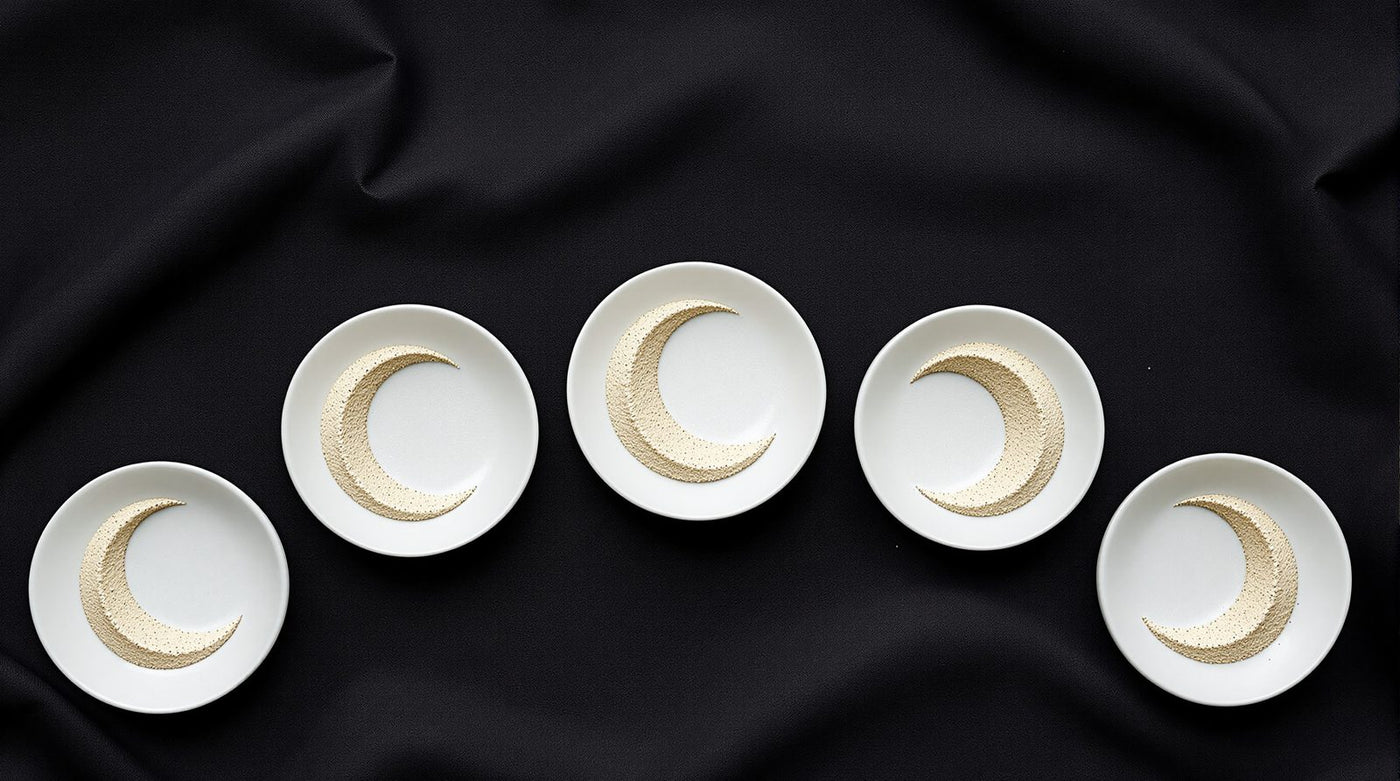
The lining clears and the cycle resets. TCM focus: moving Blood smoothly.
Follicles grow and the lining rebuilds. TCM focus: building Yin and Blood.
The egg releases and energy shifts. TCM focus: smooth Qi movement.
The lining holds and warmth sustains. TCM focus: steady Yang support.
The menstrual cycle has two primary phases: the follicular phase (from menstruation through ovulation) and the luteal phase (from ovulation through the start of your next period). Each phase is governed by different hormones and serves a different reproductive purpose.
In TCM, practitioners have recognized these distinctions for centuries. The follicular phase is characterized by yin energy: building, nourishing, accumulating. The luteal phase is characterized by yang energy: warming, holding, sustaining. Some TCM protocols historically prescribed different herbal combinations for each phase.
However, the clinical evidence points in a different direction for supplementation. A 2011 systematic review of Chinese herbal medicine for female infertility, encompassing over 1,800 women across 30 studies, found that consistent herbal treatment over a period of four months doubled pregnancy rates compared to pharmaceutical intervention alone. The studies that produced the strongest results used the same formulation throughout the entire cycle rather than protocols that changed with each phase.
Herbs That Serve the Full Cycle
A thoughtfully designed formulation includes herbs that address both yin and yang aspects of the cycle simultaneously. Here are four examples from the Project: Life formulation.
Builds and moves blood, improving circulation to reproductive organs throughout the full cycle. Supports follicle nourishment and endometrial health in both phases.
Nourishes kidney yin and supports the deep reserves that govern egg quality across the full 90 day maturation window.
Qi tonic that supports immune balance, cellular energy production, and follicle protection across all cycle phases.
One of the few herbs that tonifies both kidney yin and yang, making it uniquely effective for uninterrupted whole cycle support.
These four herbs illustrate a core principle of Dr. Ye's approach: rather than rotating formulations by phase, select herbs that serve both halves of the cycle at once. The body does not stop needing blood nourishment because it crossed from the follicular phase into the luteal phase.
What Happens in the Follicular Phase
During the follicular phase, rising estrogen drives follicle growth, endometrial thickening, and egg maturation. Herbs that nourish blood and yin support this process. However, the follicle that responds during this phase began developing months earlier, making prior supplementation the real determinant of quality.
The follicular phase begins on the first day of menstruation and lasts until ovulation, typically spanning 10 to 16 days. During this time, FSH (the hormone responsible for recruiting follicles) selects a cohort of developing follicles, one of which will become dominant and release a mature egg.
This is the phase where herbs that nourish blood and yin provide the most direct support to the active process. Angelica Sinensis (Dong Quai) has been used for over 2,000 years specifically for its ability to nourish and move blood, improving circulation to the uterus and developing follicles. Rehmannia Glutinosa supports the deep kidney yin that governs the hormonal axis driving follicle recruitment.
But here is the nuance that cycle timing advocates often miss: the dominant follicle that responds to FSH during this phase began its growth trajectory approximately 90 days earlier. The nutritional environment during those preceding months determined the quality of the egg inside that follicle. By the time you reach the follicular phase, much of the egg quality equation is already decided.
This does not mean follicular phase support is irrelevant. Blood flow to the uterus, endometrial thickness, and hormonal signaling all benefit from active supplementation during this window. It means that the most impactful supplementation began months before this particular follicular phase arrived.

What Happens in the Luteal Phase
The luteal phase is governed by progesterone, which sustains the uterine lining for potential implantation. Herbs that warm kidney yang support this phase. Yet because a comprehensive blend includes both yin and yang herbs, a single daily formulation covers both phases effectively.
After ovulation, the ruptured follicle transforms into the corpus luteum and begins producing progesterone. This hormone thickens the uterine lining, creating the conditions necessary for embryo implantation.
In TCM terms, the luteal phase is a yang phase: warm, active, and sustaining. The kidney yang must be strong enough to maintain progesterone levels and hold the uterine lining in place. When kidney yang is deficient, the luteal phase may be too short (fewer than 12 days), progesterone may drop prematurely, and the lining may begin shedding before implantation can occur.
Herbs like Eucommia Bark (Du Zhong) and Cuscuta Chinensis (Dodder Seed) strengthen kidney yang directly. Cuscuta is particularly notable because it tonifies both kidney yin and yang simultaneously, making it effective across both phases of the cycle without requiring dosage changes.
A clinical analysis of 60 women with luteal phase deficiency treated with TCM herbs found that kidney tonifying formulations used consistently across the cycle successfully addressed short luteal phases and supported pregnancy outcomes. The treatment was not limited to luteal phase dosing. It ran continuously.
This is the point that matters: a comprehensive formulation designed to nourish blood, support yin, and warm yang serves the full cycle. Removing or adjusting herbs by phase introduces unnecessary complexity and creates the risk of gaps in critical support.
What the Research Actually Shows
Systematic reviews and clinical studies consistently demonstrate that continuous herbal supplementation over three to six months produces the strongest fertility outcomes. Protocols adjusted by phase have not shown superior results in controlled studies compared to approaches that treat the whole cycle.
The most comprehensive analysis of TCM herbs and fertility is the Ried and Stuart 2011 systematic review, which examined 30 studies involving 1,851 women. The pooled analysis found that Chinese herbal medicine produced a 3.5 times greater likelihood of pregnancy over a period of four months compared to pharmaceutical fertility treatment alone, with mean pregnancy rates of 60% for herbal treatment versus 32% for conventional treatment.
What is important about these findings is what the successful protocols had in common: they used continuous daily herbal treatment across all cycle phases for a minimum of three to four months. The studies that showed the weakest results were those with shorter treatment durations or inconsistent compliance.
An updated analysis in 2014 confirmed these findings, examining additional randomized controlled trials and concluding that the duration and consistency of herbal treatment were more predictive of success than the specific timing within the cycle. A separate review of TCM herbs and IVF outcomes found that women who used Chinese herbal medicine alongside IVF treatment had significantly improved clinical pregnancy rates. Again, the protocols involved daily supplementation that did not vary by cycle phase.

Morning or Evening: Does Time of Day Matter?
There is no strong clinical evidence that morning versus evening dosing of fertility supplements produces meaningfully different outcomes. What matters is choosing a consistent time that you will maintain every day, building the habit that sustains the 90 day commitment.
This is one of the most common questions Dr. Ye's practice receives, and the answer is reassuringly simple.
For herbal formulations consumed as a brewed tea, Dr. Ye recommends drinking it warm, ideally in the morning or early afternoon. Warm consumption supports absorption and aligns with the body's natural digestive rhythm. However, evening consumption is not inferior. The herbs work regardless of when you drink them.
The reason morning dosing is gently preferred (not required) is practical. Clients who take their formulation in the morning report higher consistency. It becomes part of the daily routine: wake, brew, drink. Those who defer to evening are more likely to forget on busy days, skip on social nights, or fall asleep before remembering.
The pharmacology supports this flexibility. Unlike pharmaceutical drugs with narrow therapeutic windows, TCM herbs work through cumulative effect. They are not absorbed and cleared in hours. They build in the body over weeks and months, creating a sustained shift in the internal environment. Missing the ideal window by eight hours does not diminish that cumulative effect.
If you travel across time zones, shift your dose to match your new local morning. If you work nights, take your formulation when you wake up, whatever time that is. The clock does not matter. The daily habit does.
Consistency Is What Actually Matters
Of all the variables in fertility supplementation, daily consistency over 90 days or more is the single most predictive factor for clinical outcomes. Cycle phase timing, time of day, and food pairing are secondary considerations that rarely change results.
Clients often arrive with elaborate timing protocols. Take this during the follicular phase. Switch to that after ovulation. Add a third thing during menstruation. Stop everything on day 14.
Dr. Ye's response to this approach is consistent: simplify.
The fertility clients he has worked with over four decades who achieved the strongest outcomes share a common pattern. They chose one formulation. They took it every day. They did not overthink timing. They committed for at least three months before evaluating results. And when they felt tempted to add complexity (a new supplement, a phase rotation, a friend's recommendation from an online group), they resisted.
This is not to say that all supplements are equal, or that formulation quality does not matter. It matters enormously. Twelve clinic grade TCM herbs selected by a practitioner with 40 years of clinical observation will outperform a generic prenatal vitamin. But even the most carefully designed formulation requires time and consistency to do its work.
The most common mistake is not choosing the wrong supplement. It is starting a good one, stopping after six weeks because you do not yet see results, trying something else for a month, then returning to the original. That pattern means no single developing egg ever received uninterrupted support through its full maturation window.
Pick your formulation. Take it every day. Trust the biology. And give it 90 days.